.png)
Caribou supports you with:

Integrated stakeholder engagement
Our software provides integrated tools to efficiently engage key stakeholders—including employees, suppliers, customers, investors, and communities. It supports CSRD/ESRS double materiality assessment methodology by enabling structured consultations to identify impacts, risks, and opportunities (IROs), rate them and provide qualitative feedback. Through surveys, dialogue management, and feedback tracking, the platform ensures transparent documentation, strengthens the credibility of sustainability reporting, and helps align corporate strategy with stakeholder expectations.
Expert guidance
Caribou is built by sustainability experts and guides you step by step through the CSRD/ESRS compliance process. The platform embeds best-practice workflows, expert recommendations, and pre-configured templates aligned with ESRS disclosure requirements to support double materiality assessments, gap analysis, and data collection. With clear explanations for complex topics, Caribou simplifies standard navigation, reduces reliance on external consultants, and enables accurate, efficient preparation of your sustainability statement.


Legal questions on CSRD
Our software helps companies confidently address CSRD-related legal questions, including scope and applicability, phase-in provisions, thresholds, and assurance requirements. With embedded references to the EFRAG implementation guidance, and curated FAQs, the platform enables quick interpretation of regulatory obligations, supports audit-ready documentation, and helps users stay aligned with the evolving legal framework for sustainability reporting.
Five simple steps:
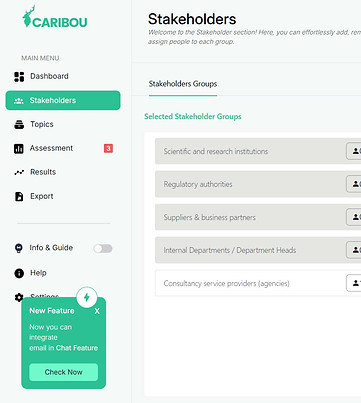
Stakeholder Analysis & Matrix
Systematically identify and map your stakeholders using a pre-defined, industry-aligned list of relevant stackeholder groups across your value chain. The platform allows you to easily add, remove, or rename stakeholder groups to reflect your specific business model, sector, and governance structure, ensuring a tailored and comprehensive foundation for stakeholder engagement and double materiality assessment.
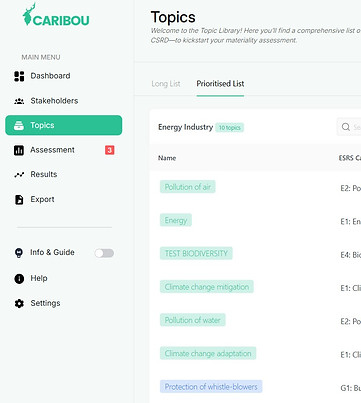
Topics Long & Short List
The platform initially provides a comprehensive, ESRS-aligned topic list that serves as a robust starting point for your double materiality assessment. You can enrich this list with sector-specific and company-specific topics to reflect your unique activities and value chain. For each topic we provide comprehensive library of Impacts, Risks and Opportunities (IROs). You can also adjust existing or add your custom IROs, while assigning clear, tailored definitions to ensure internal consistency, traceability, and audit-ready documentation.
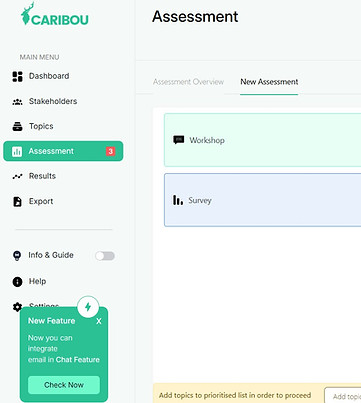
Quantitative & Qualitative Assessment
Based on your company’s size and profile, Caribou recommends the most appropriate double materiality methodology and evaluates your topic list using a tailored quantitative and qualitative approach, ensuring accurate and efficient CSRD compliance.
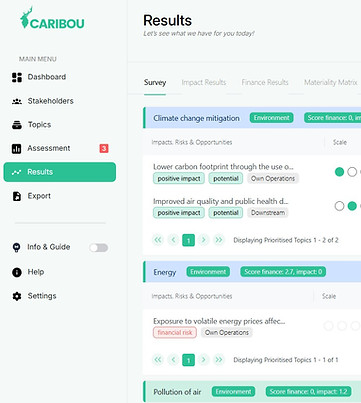
Results & Double Materiality Matrix
Instantly visualize your double materiality results with intuitive bar charts for financial and impact scores, alongside two materiality matrix views highlighting key topics and priorities. Drag-and-drop functionality lets you adjust topic positions, simulate scenarios, and refine results in real time—supporting a dynamic, user-friendly path to CSRD-compliant reporting.
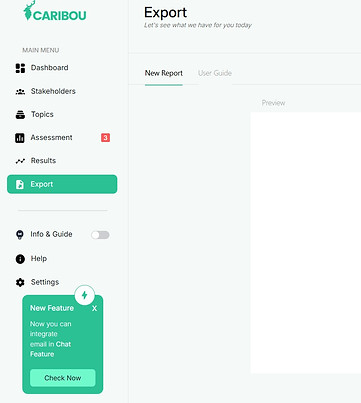
EXPORT AND REPORTING
Export your double materiality assessment as a fully pre-populated, professional report documenting the full process—methodology, stakeholder engagement, scoring rationale, and final results, including the materiality matrix and supporting charts. Structured to meet CSRD/ESRS disclosure requirements, the report ensures audit-ready traceability and transparency. Editable sections allow you to easily tailor content and add company-specific information.
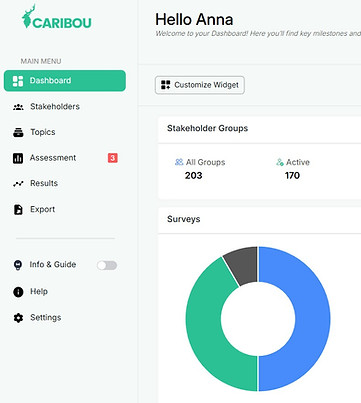
Dashboard
Access a real-time dashboard that provides a clear overview of your current CSRD and double materiality assessment status, including completion progress, ESRS topic coverage, identified gaps, and upcoming actions. The dashboard dynamically highlights next steps and critical milestones, and can be fully customized to reflect your priorities, reporting scope, and internal governance needs.

What is Double Materiality Analysis (DMA)?
The Double Materiality Analysis (DMA) is the process through which a company identifies material topics to be addressed in sustainability reporting.
Conducting an objective materiality analysis is crucial for sustainability reporting and strategy focus. Relevant stakeholders are consulted on impacts, risks, and opportunities (IROs) across environmental, social and governance matters determined to be material from the impact materiality perspective or the financial materiality perspective or both.
supported by